FairlieLab (@fairliegroup) 's Twitter Profile
FairlieLab

@fairliegroup

The Fairlie group works at the interface of chemistry, biology and disease.

ID: 581493956

linkhttp://fairlie.imb.uq.edu.au/index.php calendar_today16-05-2012 03:54:25

123 Tweet

272 Followers

21 Following

Institute for Molecular Bioscience (@imbatuq) 's Twitter Profile Photo

New research from FairlieLab shows the potential of a new inhibitor combination in the fight against #cancer. #IMB #2020IMB Discover more: bit.ly/2ZKZMDl

FairlieLab (@fairliegroup) 's Twitter Profile Photo

New research from FairlieLab shows the potential of a new inhibitor combination in the fight against #cancer. #IMB #2020IMB Discover more: bit.ly/2ZKZMDl

FairlieLab (@fairliegroup) 's Twitter Profile Photo

Our new #MR1 study with H McWilliam & J Villadangos, via new tools and techniques incl. a stable fluorescent ligand, conformation specific Ab, and genome-wide CRISPR screen #MAIT #ozchem FairlieLab Institute for Molecular Bioscience @ImagingCoE Doherty Institute Bio21 Institute pnas.org/content/early/…


FairlieLab (@fairliegroup) 's Twitter Profile Photo

New Fairlie Group paper makes the cover of ChemBiochem. Late-Stage Hydrocarbon Conjugation and Cyclisation in Synthetic Peptides and Proteins (ChemBioChem 10/2021) Dr. Aline D. de Araujo, Huy T. Nguyen, Prof. David P. Fairlie First published: 19 May 2021 doi.org/10.1002/cbic.2…

New Fairlie Group paper makes the cover of ChemBiochem.   Late-Stage Hydrocarbon Conjugation and Cyclisation in Synthetic Peptides and Proteins (ChemBioChem 10/2021)
Dr. Aline D. de Araujo, Huy T. Nguyen, Prof. David P. Fairlie
First published: 19 May 2021 doi.org/10.1002/cbic.2…
Jeffrey Mak (@jeffreyywmak) 's Twitter Profile Photo

Pleased to share our new paper - a review on our synthesis and development of ligands that modulate #MR1 and #MAIT cells in Accounts of Chemical Research ACS Publications FairlieLab Institute for Molecular Bioscience @CellsMait #ozchem pubs.acs.org/doi/10.1021/ac…

FairlieLab (@fairliegroup) 's Twitter Profile Photo

Prof. David Fairlie awarded NHMRC Investigator Grant for discovering drugs that target key protein-protein interactions in cancer, metabolic and inflammatory diseases.

FairlieLab (@fairliegroup) 's Twitter Profile Photo

Professor David Fairlie was again listed as a highly cited researcher on the Web of Science. Full list: recognition.webofscience.com/awards/highly-…

Huy Thien Nguyen (@huythiennguyen) 's Twitter Profile Photo

Great to see this paper on stapled peptides out in RSC Chemical Biology. Glad to have played a small part in this work from my time FairlieLab. We investigated how crosslinks affect helicity, protein affinity, proteolytic stability and cell uptake. pubs.rsc.org/en/content/art…

StapledPeptidePapers (@peptidepapers) 's Twitter Profile Photo

Landscaping macrocyclic peptides: stapling hDM2-binding peptides for helicity, protein affinity, proteolytic stability and cell uptake dlvr.it/SVLfFD

FairlieLab (@fairliegroup) 's Twitter Profile Photo

New Fairlie group paper: Helical structure in cyclic peptides: effect of N-methyl amides versus esters pubmed.ncbi.nlm.nih.gov/36274265/

CIPPS (@arc_cipps) 's Twitter Profile Photo

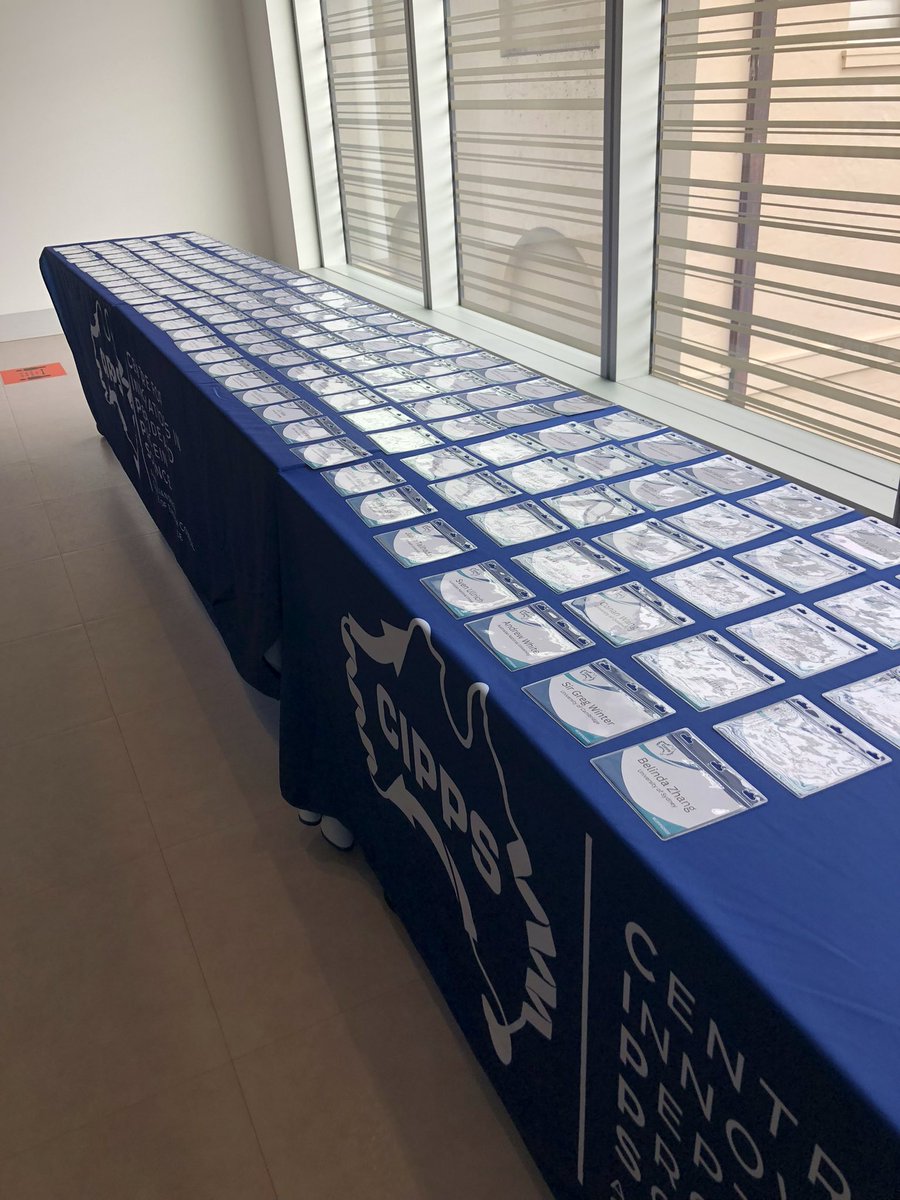
All set for our first annual conference #CIPPS22 in Sydney 🎉🎉 We are looking forward to a great program of talks and networking! 🗣🎙

All set for our first annual conference #CIPPS22 in Sydney 🎉🎉 

We are looking forward to a great program of talks and networking! 🗣🎙
CIPPS (@arc_cipps) 's Twitter Profile Photo

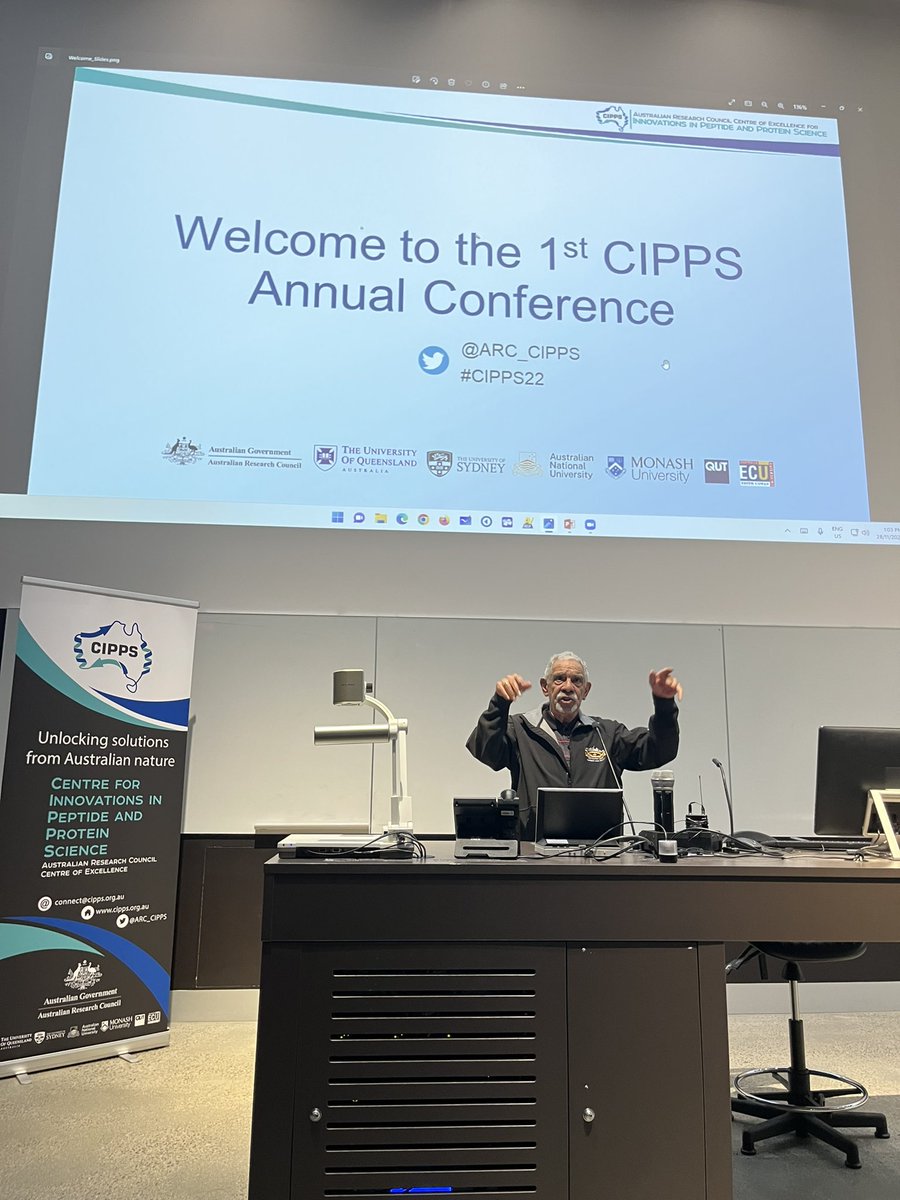
Day one of #CIPPS22 has started with a wonderful welcome to country from Uncle Allen Madden, Gadigal elder Always was, always will be.

Day one of #CIPPS22 has started with a wonderful welcome to country from Uncle Allen Madden, Gadigal elder  

Always was, always will be.
CIPPS (@arc_cipps) 's Twitter Profile Photo

Now we have FairlieLab speaking about strategies for programming peptides for cell permeability and bioavailability If we could reliably get peptides into cells and send them to specific targets, the application possibilities would be endless! #CIPPS2022
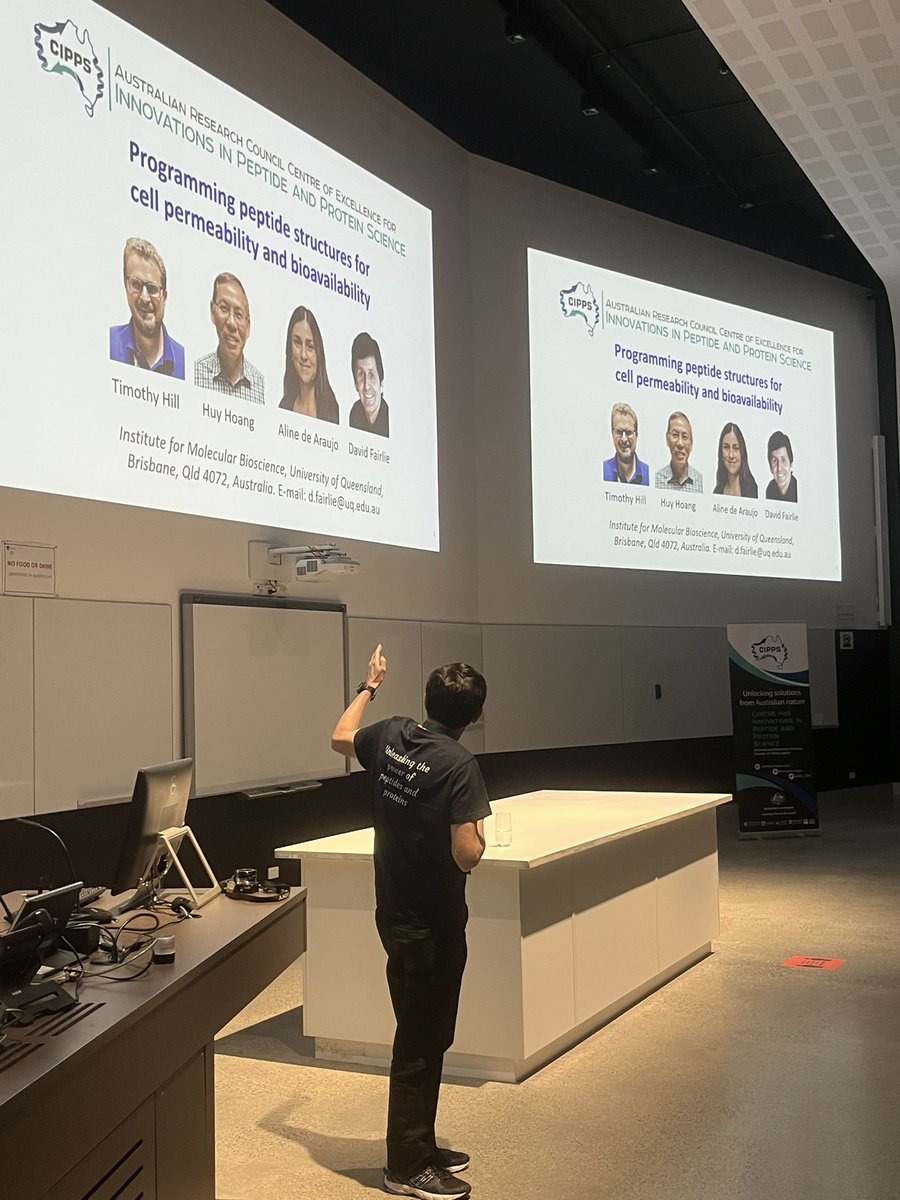
Now we have <a href="/FairlieGroup/">FairlieLab</a> speaking about strategies for programming peptides for cell permeability and bioavailability 

If we could reliably get peptides into cells and send them to specific targets, the application possibilities would be endless! 

#CIPPS2022
CIPPS (@arc_cipps) 's Twitter Profile Photo

That’s a wrap on #CIPPS2022 👏 Thank you to everyone who made it such a fantastic meeting! We feel so inspired by the great peptide and protein science that was shared and we can’t wait to see what’s next 👀

That’s a wrap on #CIPPS2022 👏

Thank you to everyone who made it such a fantastic meeting! We feel so inspired by the great peptide and protein science that was shared and we can’t wait to see what’s next 👀
FairlieLab (@fairliegroup) 's Twitter Profile Photo

Welcome back to Damica Laurie who is returning to the Fairlie Group as a PhD student. Damica recently completed her Honours Degree (achieving First Class Honours) with us.

FairlieLab (@fairliegroup) 's Twitter Profile Photo

New paper published: "HDAC7 is an immunometabolic switch triaging danger signals for engagement of antimicrobial versus inflammatory responses in macrophages". January 17, 2023 120 (4) e2212813120 doi.org/10.1073/pnas.2…

FairlieLab (@fairliegroup) 's Twitter Profile Photo

Professor David Fairlie awarded NHMRC Development grant for developing a new type of drug for inflammatory lung disease. #medicinalchemistry #lunginflammation #allergicasthma #pulmonaryfibrosis #COPD #FairlieLab

FairlieLab (@fairliegroup) 's Twitter Profile Photo

Sulfated bile acid is a host-derived ligand for MAIT cells. Ito E, Inuki S, Izumi Y, Takahashi M, Dambayashi Y, Ciacchi L, Awad W, Takeyama A, Shibata K, Mori S, Mak JYW, Fairlie DP, Bamba T, Ishikawa E, Nagae M, Rossjohn J, Yamasaki S. Sci Immunol. 2024 Jan 26;9(91):eade6924.

Sulfated bile acid is a host-derived ligand for MAIT cells.  Ito E, Inuki S, Izumi Y, Takahashi M, Dambayashi Y, Ciacchi L, Awad W, Takeyama A, Shibata K, Mori S, Mak JYW, Fairlie DP, Bamba T, Ishikawa E, Nagae M, Rossjohn J, Yamasaki S.
Sci Immunol. 2024 Jan 26;9(91):eade6924.