
Ian Lundberg (@ianlundberg1) 's Twitter Profile
Ian Lundberg

@ianlundberg1

Studying sociology, stats, data science, inequality @ucla. Assistant Professor @SociologyUcla. Affiliate @CCPRatUcla

ID: 598993206

linkhttp://ianlundberg.org calendar_today04-06-2012 04:00:05

278 Tweet

1,1K Followers

559 Following

Elena Llaudet (@ellaudet) 's Twitter Profile Photo

My textbook with Kosuke Imai (Harvard University) is finally out! Assuming no prior knowledge of statistics or coding and only minimal knowledge of math, DSS teaches the fundamentals of survey research, predictive models, and causal inference + how to analyze real-world data with R. 🧵..
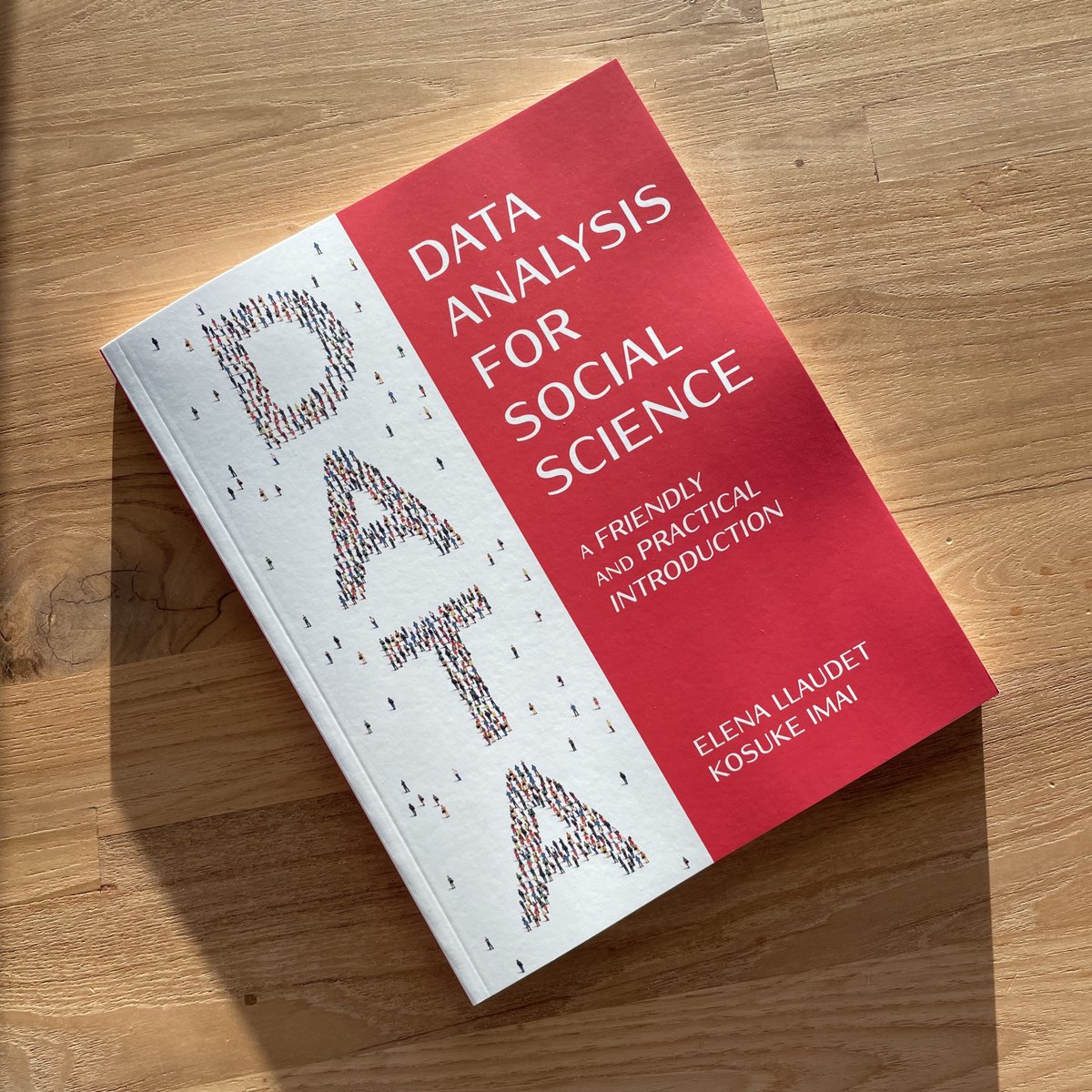
My textbook with Kosuke Imai (<a href="/Harvard/">Harvard University</a>) is finally out!

Assuming no prior knowledge of statistics or coding and only minimal knowledge of math, DSS teaches the fundamentals of survey research, predictive models, and causal inference + how to analyze real-world data with R.

🧵..
Ian Lundberg (@ianlundberg1) 's Twitter Profile Photo

Last day to submit to "Causal Inference in the Social Sciences" to join us at the ASA Sociology meeting in Philadelphia in August! I look forward to reading some terrific causal submissions asanet.org/annual-meeting…
Jennie Brand (@jenniebrand1) 's Twitter Profile Photo

We are excited to announce that CCPR at UCLA is once again hosting a Summer Institute in Computational Social Science (SICSS) sicss.io with support from the Division of Social Sciences at UCLA LA Social Science.

Jennie Brand (@jenniebrand1) 's Twitter Profile Photo

Forthcoming in 2023! Russell Sage Foundation In this book, I show that four-year college completion enables disadvantaged graduates who overcome the odds of completing degrees to increase long-term wages, while also reducing unemployment, low-wage work, job loss, and family poverty.
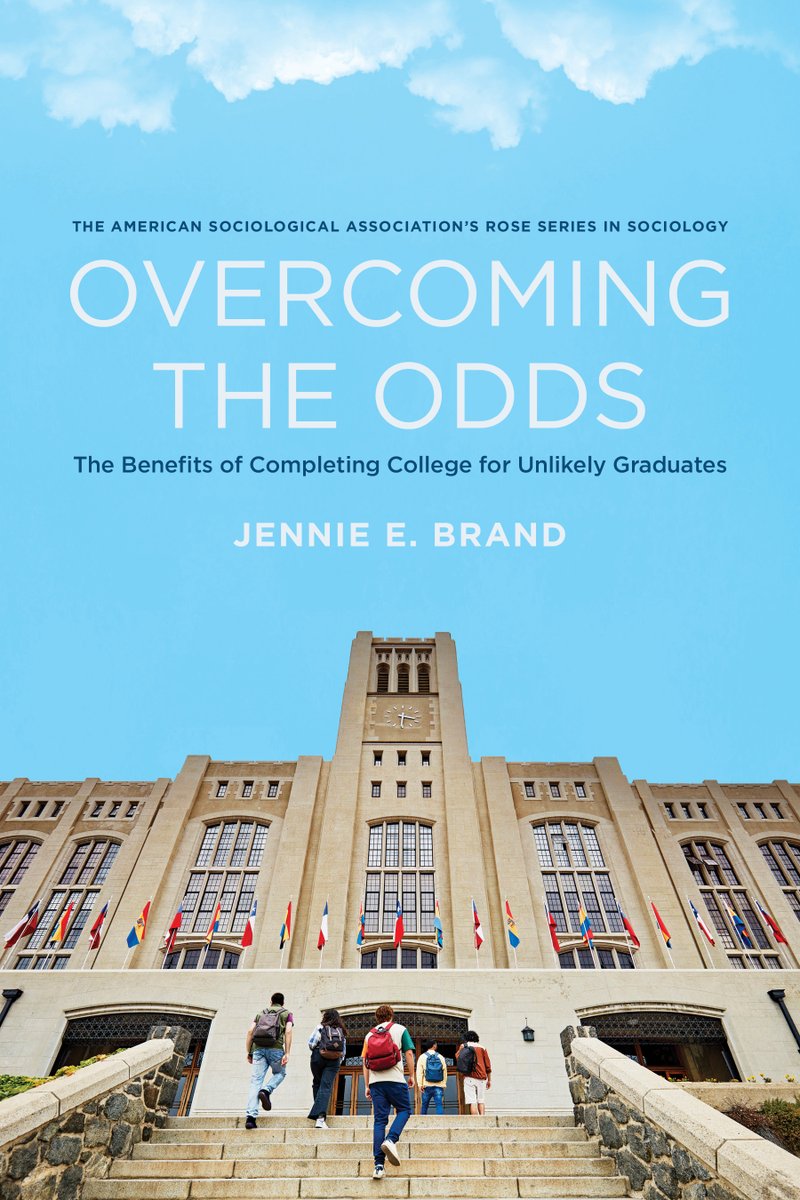
Forthcoming in 2023! <a href="/RussellSageFdn/">Russell Sage Foundation</a> In this book, I show that four-year college completion enables disadvantaged graduates who overcome the odds of completing degrees to increase long-term wages, while also reducing unemployment, low-wage work, job loss, and family poverty.
Ian Lundberg (@ianlundberg1) 's Twitter Profile Photo

Still got ASA Sociology energy? Close out your conference with causal inference! 3 presentations, 3 discussants. Will be a treat(ment) you won't want to miss! asa_methodology
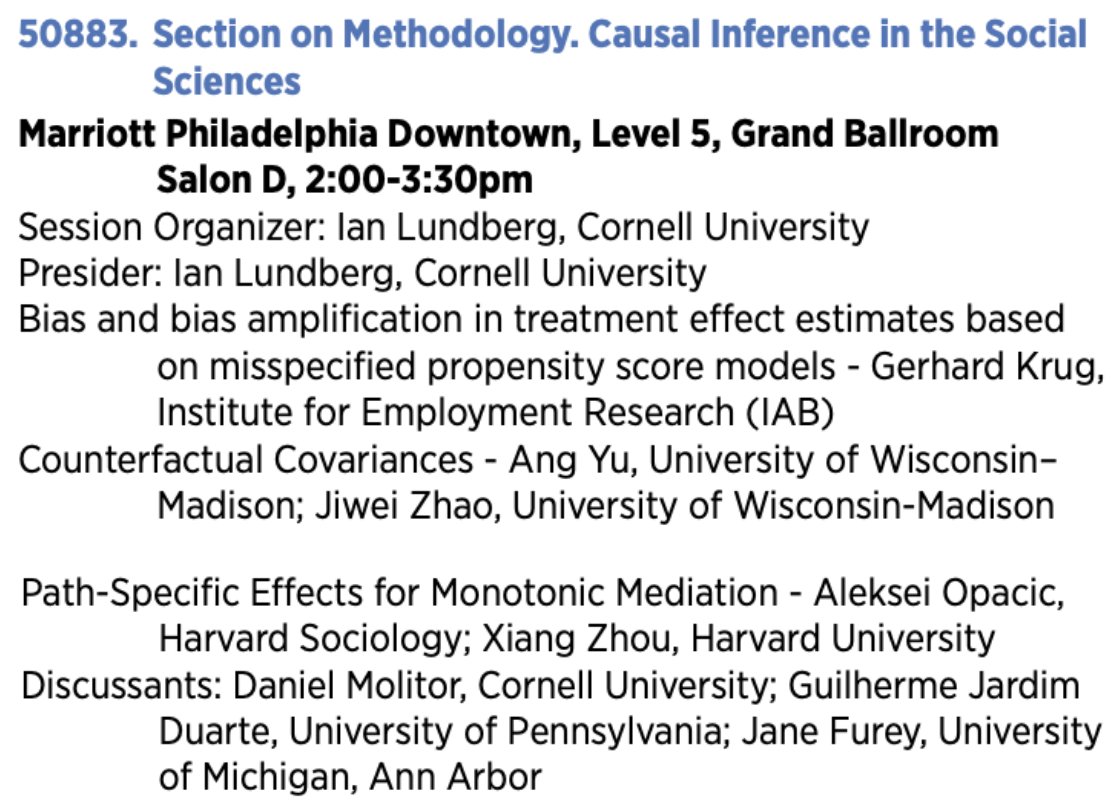
Still got <a href="/ASAnews/">ASA Sociology</a> energy? Close out your conference with causal inference! 3 presentations, 3 discussants. Will be a treat(ment) you won't want to miss! <a href="/AsaMethodology/">asa_methodology</a>
Jennie Brand (@jenniebrand1) 's Twitter Profile Photo

Our Social Inequality Data Science (SIDS) Lab summer party (from a few weeks ago) sidatasciencelab.org, with Ian Lundberg Nathan Hoffmann @NanumJ Shiva Rouhani Bo-Wei Hu Maureen Cowhey, Taylor Aquino, Pablo Geraldo, Shibing Zhou, Lucas Ophoff, Soonhong Cho
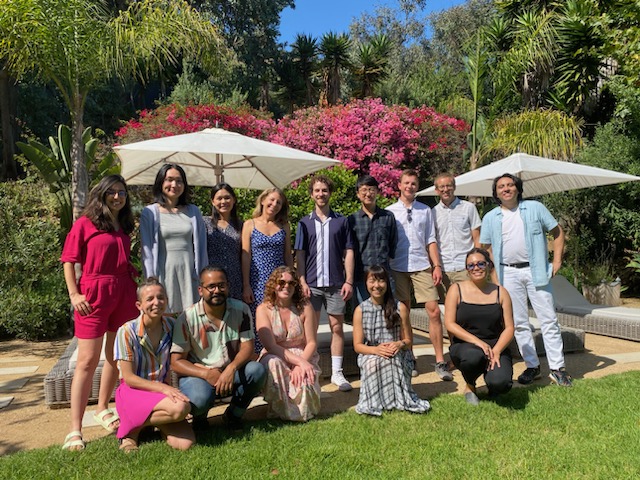
Our Social Inequality Data Science (SIDS) Lab summer party (from a few weeks ago) sidatasciencelab.org, with <a href="/IanLundberg1/">Ian Lundberg</a>   <a href="/nathanihoff/">Nathan Hoffmann</a> @NanumJ <a href="/shivarouhani/">Shiva Rouhani</a> <a href="/bowei_hu/">Bo-Wei Hu</a>  Maureen Cowhey, Taylor Aquino, Pablo Geraldo, Shibing Zhou, Lucas Ophoff, Soonhong Cho
Ian Lundberg (@ianlundberg1) 's Twitter Profile Photo

I move to UCLA Sociology in July! I have loved my time at Cornell. It is a dream to move home to SoCal and to join such a wonderful department. Also looking forward to continued ties with CCPR at UCLA!
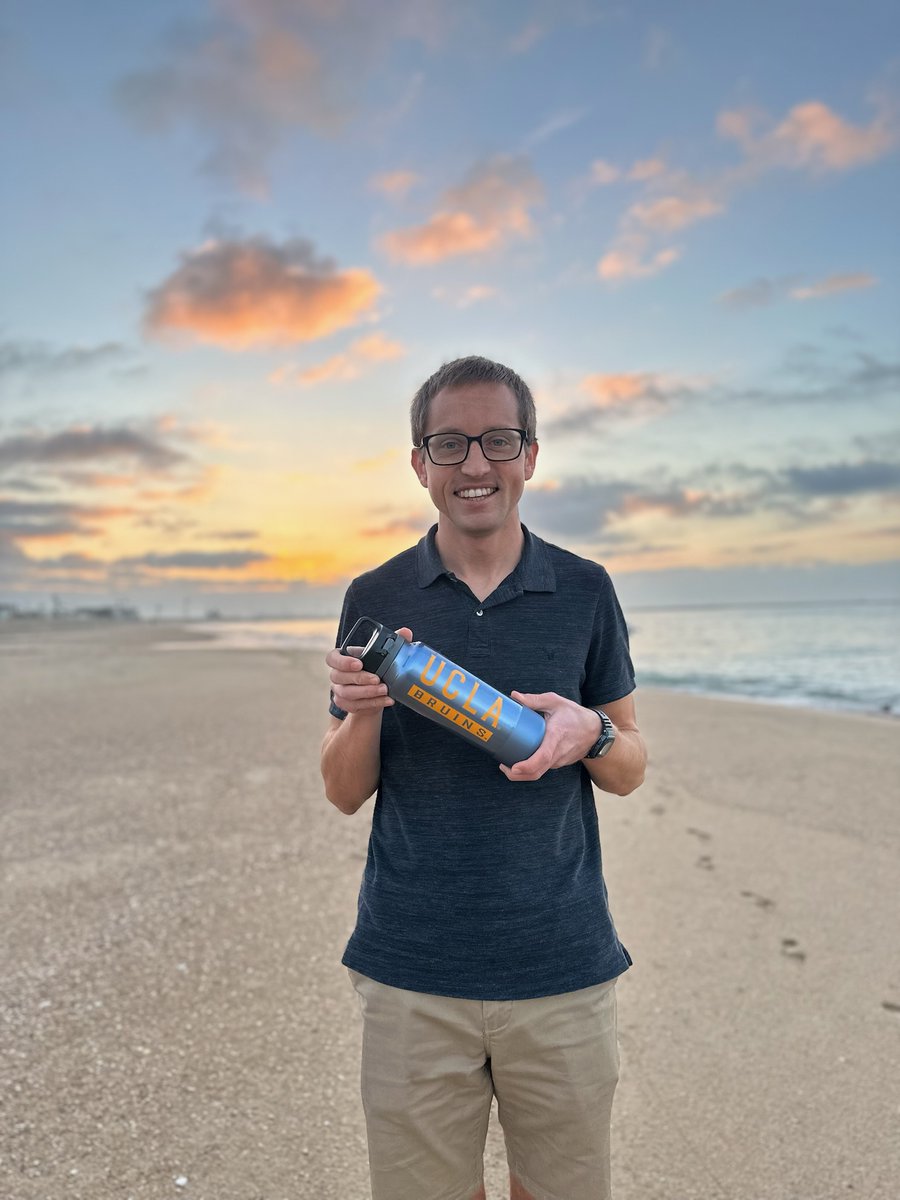
I move to <a href="/SociologyUcla/">UCLA Sociology</a> in July! I have loved my time at Cornell. It is a dream to move home to SoCal and to join such a wonderful department. Also looking forward to continued ties with <a href="/CCPRatUCLA/">CCPR at UCLA</a>!
Matthew Salganik | @msalganik.bsky.social (@msalganik) 's Twitter Profile Photo

Our new paper explains why some life outcomes are hard to predict. We combined machine learning, a mathematical decomposition, and in-depth qualitative interviews to understand the origins of unpredictability: pnas.org/doi/10.1073/pn…

Our new paper explains why some life outcomes are hard to predict. We combined machine learning, a mathematical decomposition, and in-depth qualitative interviews to understand the origins of unpredictability: pnas.org/doi/10.1073/pn…