

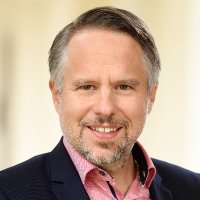
Mathias Dolls
@mathiasdolls
Economist, Deputy Director of @ifo_Institut Center for Macroeconomics and Surveys, Interests: Public Econ | Labor markets | Econ Policy. Views my own.
ID: 722035192714629120
https://sites.google.com/view/mathiasdolls 18-04-2016 12:12:59
503 Tweet
905 Followers
869 Following

Im weltweiten Vergleich arbeiten die #Deutschen überdurchschnittlich oft von zu Hause. Dies zeigt eine neue #ifoAuswertung unter #Arbeitnehmern mit Hochschulabschluss in 40 Ländern. #Homeoffice ➡️ifo.de/pressemitteilu… Mathias Dolls


🚨 New research out! 🚨 Words matter! Change the language about debt → change how people think, feel, and choose. Our new paper featured in Frankfurter Allgemeine: zeitung.faz.net/fas/wirtschaft… Full paper (with Cevat Giray Aksoy, J. Klejdysz, Andreas Peichl, L. Windsteiger): ifo.de/en/cesifo/publ…

Can one word change borrowing decisions? In our new WP "Speaking of Debt: Framing, Guilt, and Economic Choices" (with Cevat Giray Aksoy, Mathias Dolls, Andreas Peichl, and Lisa Windsteiger), we show how moral connotations in language shape attitudes & behaviors toward debt.

Speaking of debt: Framing, guilt, and economic choices cepr.org/voxeu/columns/… via CEPR VoxEU Cevat Aksoy Mathias Dolls Justyna Klejdysz
✨Winter School #IT19 ✨ Habemus program: linux2.dse.univr.it/it/index.php/p… Andreas Peichl Mathias Dolls Denisa M. Sologon Teresa Munzi Roberto Iacono Giorgia Menta Anthony Lepinteur Vito Peragine paolo verme