

Roxanne Rahnama
@roxannerahnama
IDEAL fellow @stanford. phd @nyupolitics. previously @tppmit & @ucberkeley.
زن، زندگى، آزادى | jin - jiyan - azadi | women, life, freedom
ID: 788168731
http://roxannerahnama.com 29-08-2012 00:24:59
1,1K Tweet
743 Followers
2,2K Following

Zero-sum thinking is a key mindset that shapes how we view the world. Excited to share a new paper on the roots and consequences of Zero-sum thinking with Sahil Chinoy, Nathan Nunn Sandra.Sequeira. A summary thread🧵1/23 scholar.harvard.edu/files/stantche…


In first-view AJPS, Elizabeth Sperber O'Brien Kaaba + I examine the impact of different digital civic education courses on youth pol participation in Zambia. Our partners eg Council of Churches in Zambia Caritas Zambia CCMG Zambia and we were interested in whether… onlinelibrary.wiley.com/doi/10.1111/aj…





CFP: The 2025 Rebecca B. Morton Conference on Experimental Political Science, which will be held on Friday, March 7th and Saturday, March 8th, 2025 New York University Submit paper and poster proposals here: nyu.qualtrics.com/jfe/form/SV_0x… by Dec 10 Anna Wilke Tara Slough NYU Politics Department
❓Does removing Confederate symbols change attitudes and behavior regarding race & racial inequality? Roxanne Rahnama answers this question in the latest Journal of Politics @[email protected] blog post. Find out more⬇️ jop.blogs.uni-hamburg.de/does-removing-…

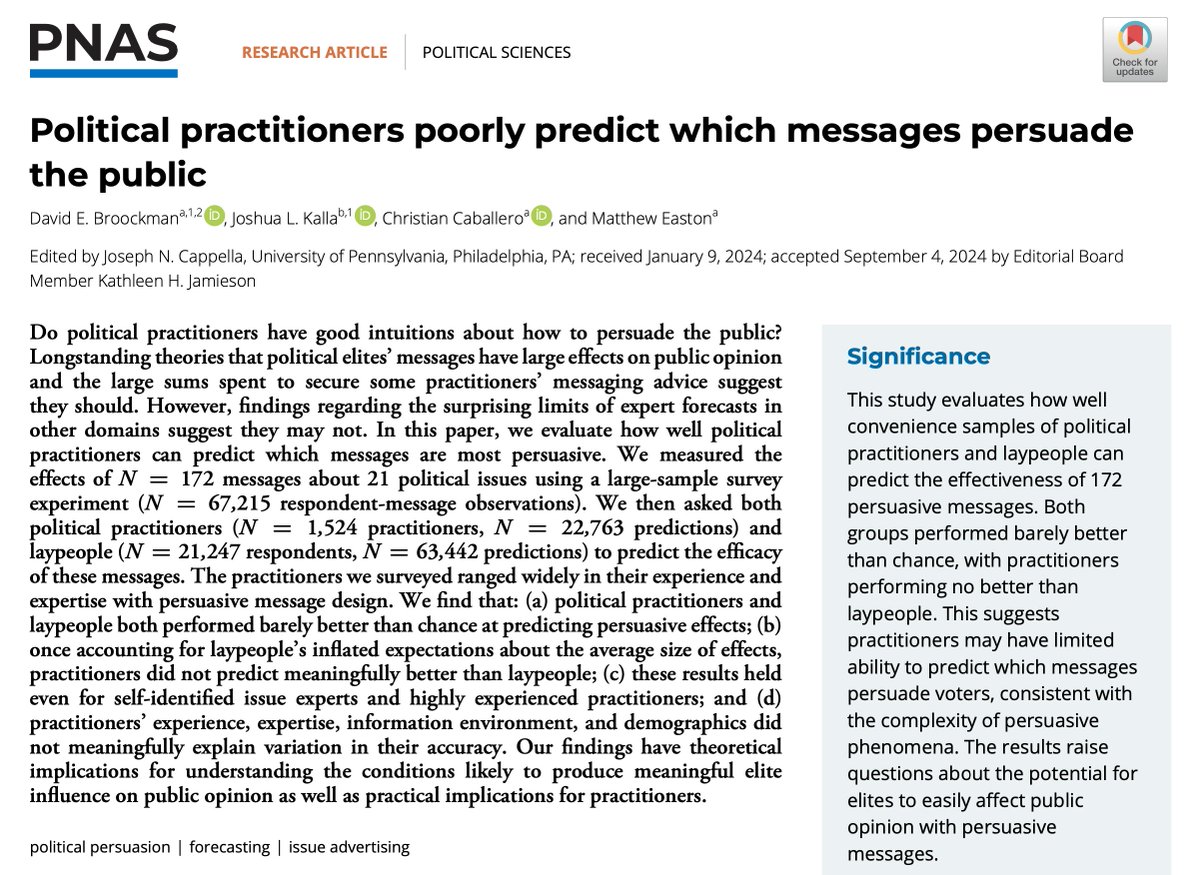
New at PNASNews with David Broockman, christian caballero & Matty Easton: "Political practitioners poorly predict which messages persuade the public." As we head into the last week of the campaign, a good reminder that political practitioners have poor intuitions as to what persuades



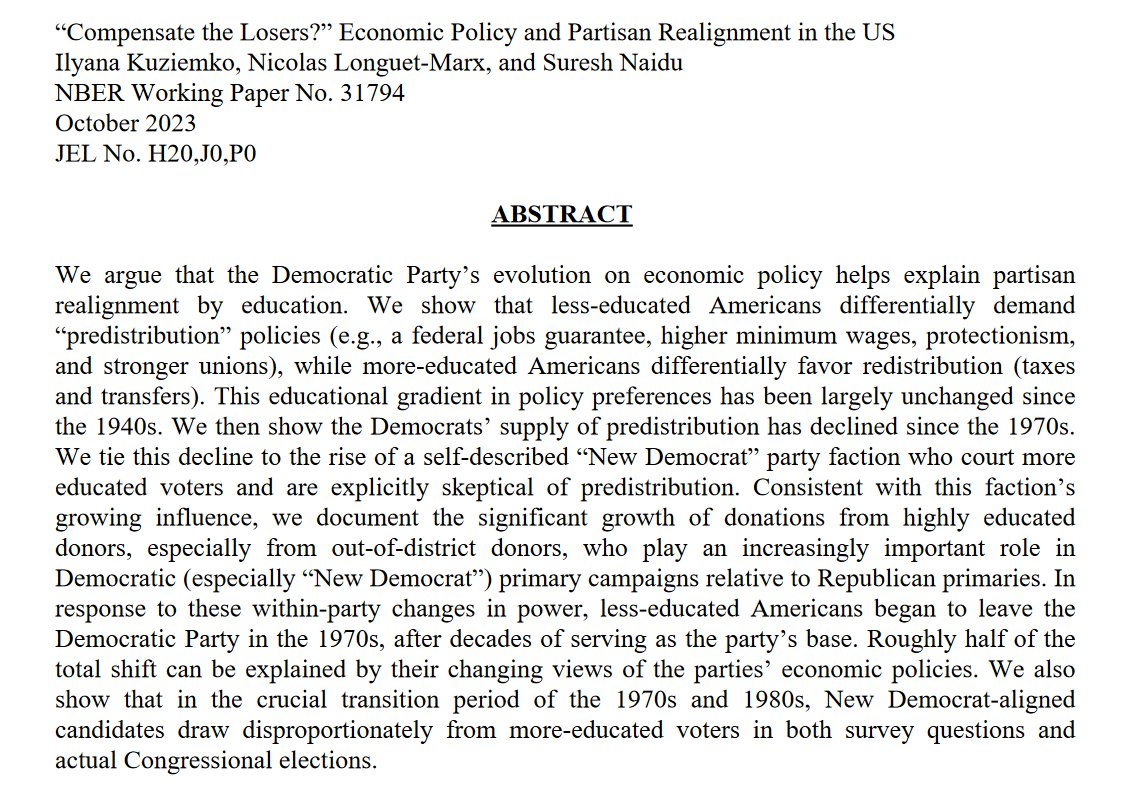

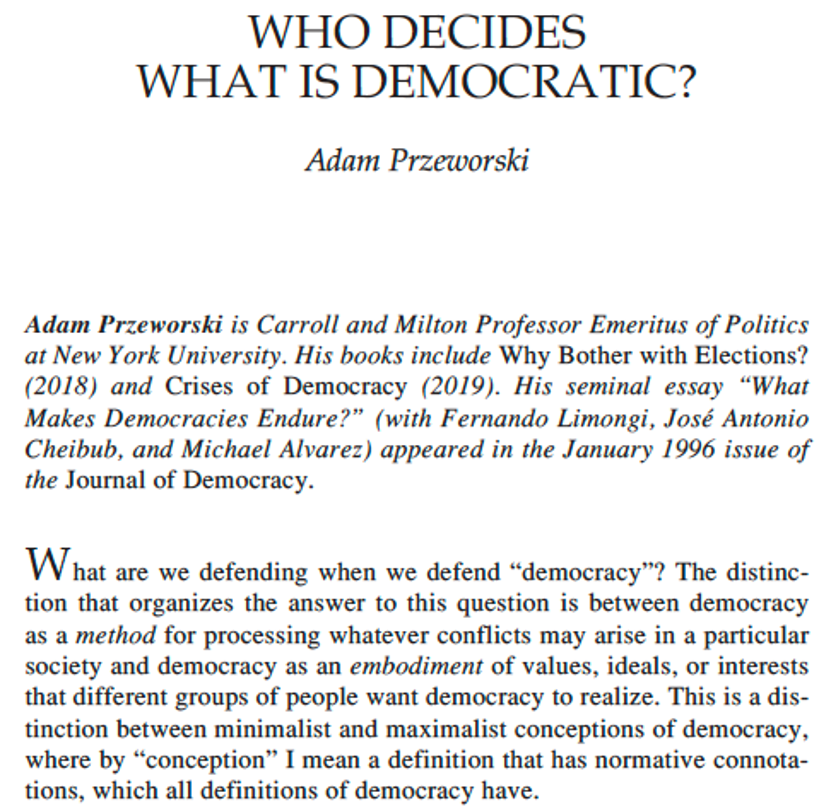
In light of the past week, this recent paper by Adam Przeworski merits a re-read. The argument that “democracy’s defenders must offer a forward-looking perspective that seeks to improve representative institutions” is particularly relevant. Free download: muse.jhu.edu/pub/1/article/…



The second #MayDay2025 project is with the amazing Roxanne Rahnama and focuses on knowledge about labor history. We argue that the absence of education on historical class struggle and labor organizing weakens support for the contemporary labor movement in the US.
