
Brent Sullivan (@taxalphainsider) 's Twitter Profile
Brent Sullivan

@taxalphainsider

Tax analyst. ETFs, direct indexing, long/short, bonds, options, you name it. Former Zillow software, Parametric software, PIMCO trade floor.

ID: 1694420991773143040

linkhttps://www.taxalphainsider.com calendar_today23-08-2023 18:47:11

212 Tweet

482 Followers

108 Following
Brent Sullivan (@taxalphainsider) 's Twitter Profile Photo

People keep pitching me solutions. The options ones in particular are easy to permute. Are private QOFs vs. ETF QOFs really different solutions? What if I combine solutions? Is that a new solution?

People keep pitching me solutions. The options ones in particular are easy to permute. Are private QOFs vs. ETF QOFs really different solutions? What if I combine solutions? Is that a new solution?
Brent Sullivan (@taxalphainsider) 's Twitter Profile Photo

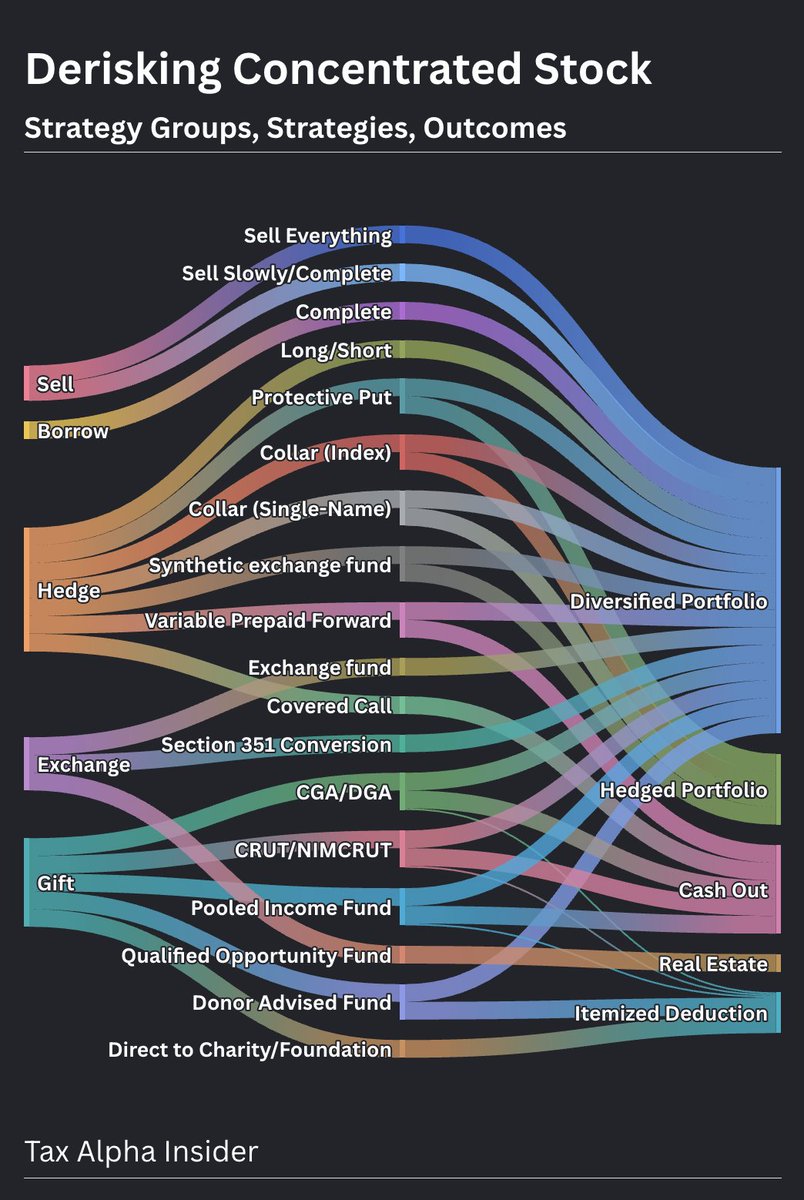
Visualizing concentrated public stock derisking solutions... or, finally, a reason to use a Sankey diagram. *QOF isn't really an exchange per se, but close enough Feedback welcome. Still noodling on the best approach.

Visualizing concentrated public stock derisking solutions... or, finally, a reason to use a Sankey diagram.

*QOF isn't really an exchange per se, but close enough

Feedback welcome. Still noodling on the best approach.
Brent Sullivan (@taxalphainsider) 's Twitter Profile Photo

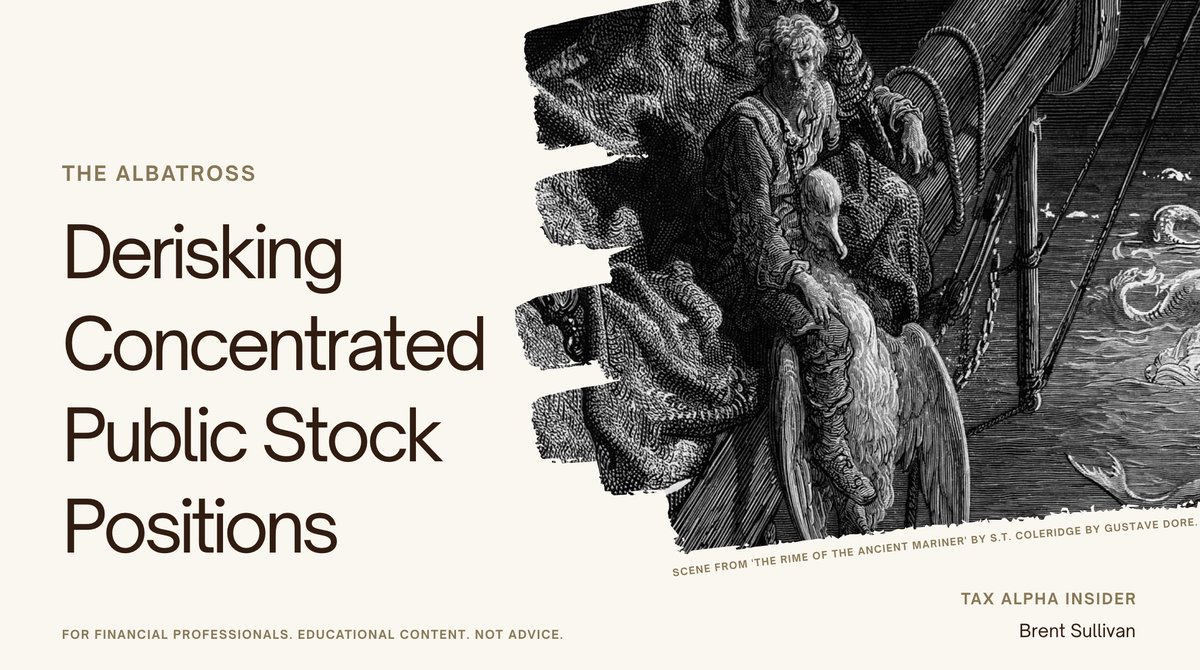
Giving a CE-credit talk next week (actually three, with different partners... busy week!)... here's the title slide for the one I'll do with Oklahoma CFP.

Giving a CE-credit talk next week (actually three, with different partners... busy week!)... here's the title slide for the one I'll do with Oklahoma CFP.
Brent Sullivan (@taxalphainsider) 's Twitter Profile Photo

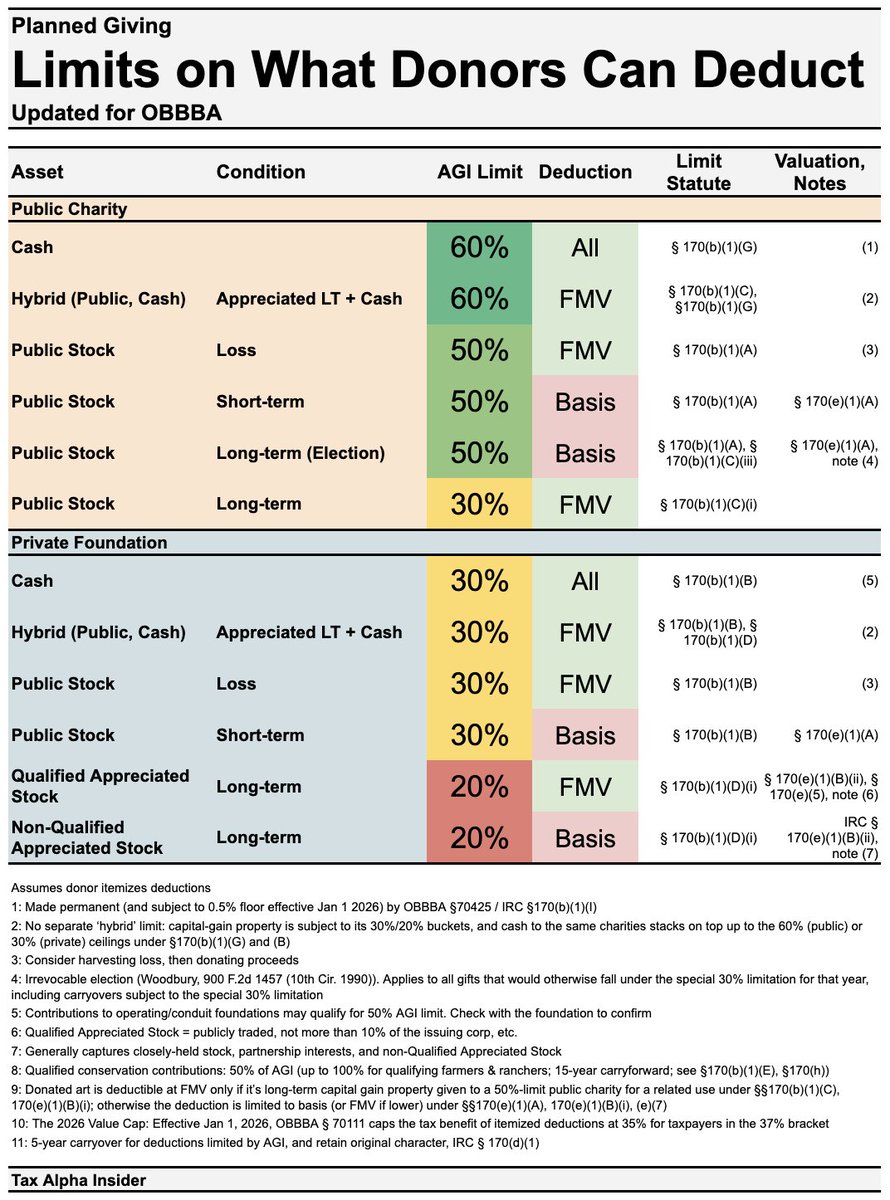
Giving is easy, but tax planning is hard. Federal deductions related to giving are generally governed by... 1) Adjusted gross income limits (IRC § 170(b)) 2) The valuation of the gift: basis or FMV (IRC § 170(e)) Some examples: • Deductions for cash donations to public

Giving is easy, but tax planning is hard. 

Federal deductions related to giving are generally governed by...
1) Adjusted gross income limits (IRC § 170(b))
2) The valuation of the gift: basis or FMV (IRC § 170(e))

Some examples:
• Deductions for cash donations to public
Brent Sullivan (@taxalphainsider) 's Twitter Profile Photo

A big part of tax management is timing. When to do a Roth conversion? When to realize capital gains? When to donate for maximum impact. I teamed up with Morgan Stanley's Brian C. Smith, Eileen Tam, and former Eaton Vance CEO and Morgan Stanley Investment Management Chairman, Tom

A big part of tax management is timing. When to do a Roth conversion? When to realize capital gains? When to donate for maximum impact.

I teamed up with Morgan Stanley's Brian C. Smith, Eileen Tam, and former Eaton Vance CEO and Morgan Stanley Investment Management Chairman, Tom
Brent Sullivan (@taxalphainsider) 's Twitter Profile Photo

This is my background research for the philanthropy CE course I shipped with Morgan Stanley yesterday. Some points to keep in mind... Generally (and assuming they itemize), donation deductions are subject to certain limits: 1) Adjusted gross income (§170(b)) 2) Valuation of the

This is my background research for the philanthropy CE course I shipped with Morgan Stanley yesterday. Some points to keep in mind...

Generally (and assuming they itemize), donation deductions are subject to certain limits:
1) Adjusted gross income (§170(b))
2) Valuation of the
Brent Sullivan (@taxalphainsider) 's Twitter Profile Photo

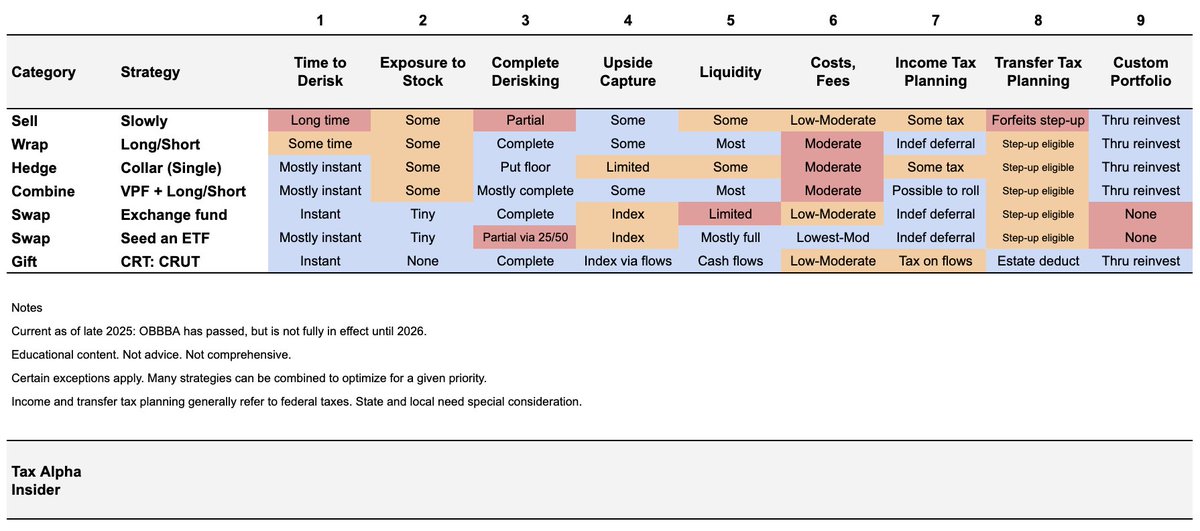
My 9-criteria framework for comparing solutions to single-stock concentration and 7 example strategies side-to-side. Not perfect. There's a quant way to combine and compare (using an optimizer), but I want to capture the qualitative stuff too (e.g. access to liquidity).

My 9-criteria framework for comparing solutions to single-stock concentration and 7 example strategies side-to-side. Not perfect. There's a quant way to combine and compare (using an optimizer), but I want to capture the qualitative stuff too (e.g. access to liquidity).
Brent Sullivan (@taxalphainsider) 's Twitter Profile Photo

Me, whenever I read a tax-loss harvesting paper that assumes every single dollar harvested is quashing short-term realized capital gains.

Me, whenever I read a tax-loss harvesting paper that assumes every single dollar harvested is quashing short-term realized capital gains.
Brent Sullivan (@taxalphainsider) 's Twitter Profile Photo

If you're donating shares, now is probably the time. I processed a donation more than 2 weeks ago and my broker just called and asked to confirm it. It might look easy, but it's probably hamsters running aggressively behind the scenes especially if the shares are moving to a new

Brent Sullivan (@taxalphainsider) 's Twitter Profile Photo

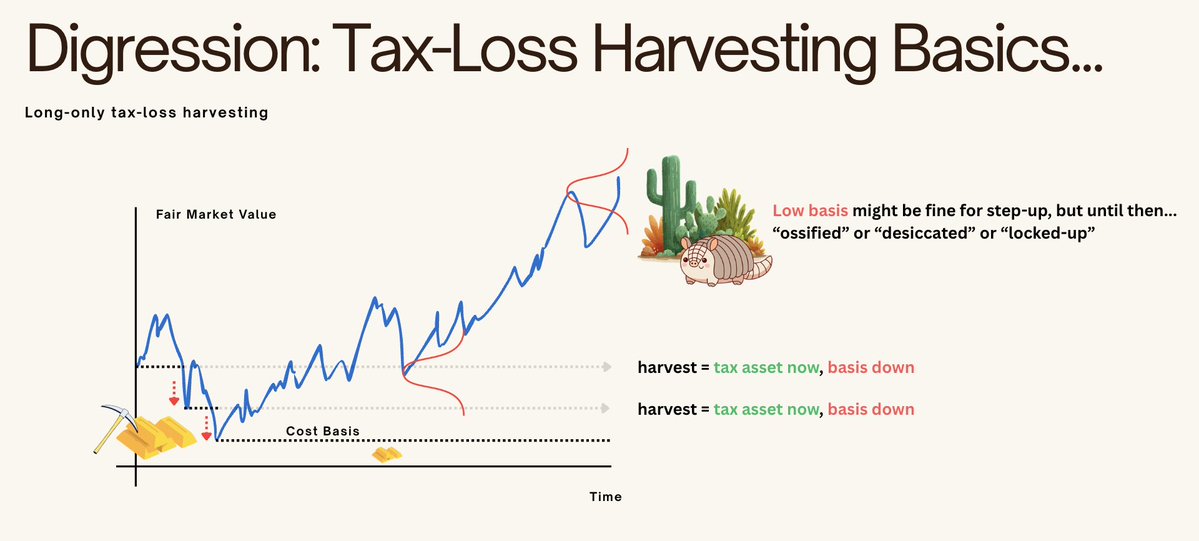
One-slide refresher on tax-loss harvesting: basis = pile of gold you can mine, but it's finite. Long/short is different. The long will ossify similarly to long-only, but harvesting unlimited risk in the shorts makes it possible to thoughtfully realize gains on the long to

One-slide refresher on tax-loss harvesting: basis = pile of gold you can mine, but it's finite. 

Long/short is different. 

The long will ossify similarly to long-only, but harvesting unlimited risk in the shorts makes it possible to thoughtfully realize gains on the long to
Brent Sullivan (@taxalphainsider) 's Twitter Profile Photo

We need a new cert for concentrated wealth management. A body of knowledge for advisers so they're not duped by some slick vendor pitch. Concentrated wealth is a ubiquitous problem whose solution still mostly lives in blogs, books, podcasts, and one-off vendor tools. It's time

Brent Sullivan (@taxalphainsider) 's Twitter Profile Photo

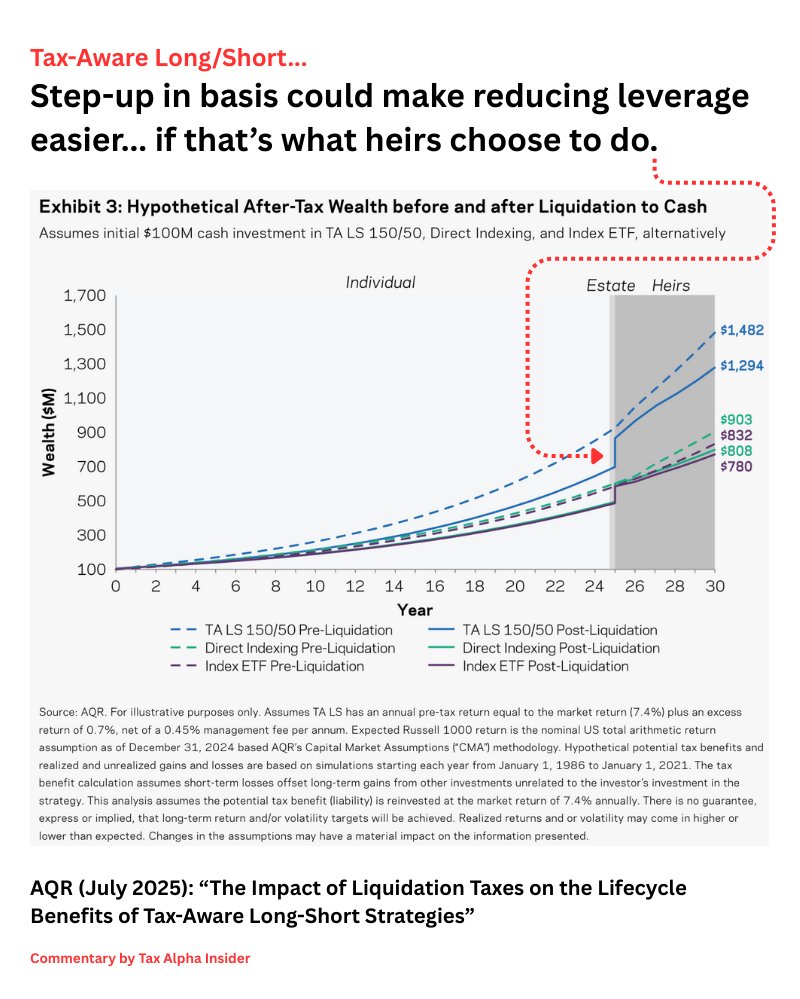
"How hard is it to unwind a tax-aware long/short portfolio to long-only?" is perhaps the wrong question. Instead, investors need to assess whether they are appropriately compensated (alpha, tax perks) for the risk and cost they bear (fees, financing, trading, tracking error).

"How hard is it to unwind a tax-aware long/short portfolio to long-only?" is perhaps the wrong question.

Instead, investors need to assess whether they are appropriately compensated (alpha, tax perks) for the risk and cost they bear (fees, financing, trading, tracking error).
Brent Sullivan (@taxalphainsider) 's Twitter Profile Photo

"Given enough time, active management always underperforms." (c.f. SPIVA after-tax scorecards). This is coming up a lot nowadays as advisers consider tax-aware long/short strategies. Many tell me exposure to the manager's alpha model is their primary concern when making

Brent Sullivan (@taxalphainsider) 's Twitter Profile Photo

There's a rumor going around that tax-aware long/short managers don't know about wash sales and constructive sales. That's ridiculous. At the sleeve level, that problem is solved. Anyone arguing it as a feature is behind the curve. If there's an area that needs further

Brent Sullivan (@taxalphainsider) 's Twitter Profile Photo

I just had the pleasure of reading Smaldino v. Commissioner, T.C. Memo. 2021-127. People are silly. Short illustration of substance over form and step transaction doctrine in tomorrow's blog.

I just had the pleasure of reading Smaldino v. Commissioner, T.C. Memo. 2021-127. People are silly. Short illustration of substance over form and step transaction doctrine in tomorrow's blog.
Seattle Mariners (@mariners) 's Twitter Profile Photo

⚾ REPOST TO WIN ⚾ We’re giving away a signed Josh Naylor baseball and all you need to do is hit that repost button to enter.

⚾ REPOST TO WIN ⚾

We’re giving away a signed Josh Naylor baseball and all you need to do is hit that repost button to enter.