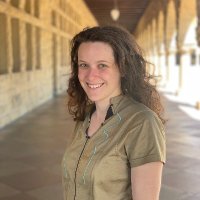
Rachel Ungar (@raungar) 's Twitter Profile
Rachel Ungar

@raungar

Postdoc at @StanfordBioethx
Genetics PhD from @StanfordMed, @UArkansas Alumna
elsi / rna-seq / rare disease / multi-omics / chronic illness / x-chromosome

ID: 2777636732

calendar_today29-08-2014 02:48:13

341 Tweet

485 Followers

695 Following
Shen-Ying Zhang (@shenyingzhang1) 's Twitter Profile Photo

1) Just out nature today! We show that human TMEFF1 is a restriction factor for #Herpes simplex virus 1(HSV1) in the brain, by limiting NECTIN1—HSV1-gD mediated HSV1 entry into cortical neurons. TMEFF1 defect can underlie HSV1 #encephalitis. nature.com/articles/s4158…

1) Just out <a href="/Nature/">nature</a> today! We show that human TMEFF1 is a restriction factor for #Herpes simplex virus 1(HSV1) in the brain, by limiting NECTIN1—HSV1-gD mediated HSV1 entry into cortical neurons. TMEFF1 defect can underlie HSV1 #encephalitis. nature.com/articles/s4158…
Jared M. Cole (@jmillercole) 's Twitter Profile Photo

Very excited to share our new preprint from the Kirkpatrick and @arbelharpak labs! Natural selection can act differently on females and males. How frequently does this happen in the human genome? biorxiv.org/content/10.110… 1/n

Kaitlin Samocha (@ksamocha) 's Twitter Profile Photo

In our latest work, we explore the contribution of rare, typically inherited, damaging genetic variants to the risk of severe developmental disorders (DDs) and establish a major role for incompletely penetrant rare variation. Now out on medRxiv: medrxiv.org/content/10.110…

Anna Lewis (@acflewis) 's Twitter Profile Photo

What do we mean by diversity in data in genetics, and how should we achieve the benefits it is designed to bring? Piece in Nature Genetics out today, summarizing a new GA4GH policy framework. A thread. rdcu.be/dTpfu

Michael Belloy (@belloymichael) 's Twitter Profile Photo

For nearly 2 decades, Alzheimer’s disease (AD) “genome-wide” association studies only covered the autosomes. Today we unveil the X chromosome and prioritize SLC9A7, a.k.a. NHE7, as an AD risk gene. Article: jamanetwork.com/journals/jaman… Editorial: jamanetwork.com/journals/jaman…

For nearly 2 decades, Alzheimer’s disease (AD) “genome-wide” association studies only covered the autosomes. Today we unveil the X chromosome and prioritize SLC9A7, a.k.a. NHE7, as an AD risk gene.
Article: jamanetwork.com/journals/jaman…
Editorial: jamanetwork.com/journals/jaman…
Rachel Ungar (@raungar) 's Twitter Profile Photo

First study finding an abundance of sex-biased eQTLs (the lack of sex-biased eQTLs has been a major q in the field). Plus results suggests TFs as a major mechanism for sex differences

Rachel Ungar (@raungar) 's Twitter Profile Photo

A great browser that includes not just the gene-level results, but also biomarker importance! An example: public.cgr.astrazeneca.com/milton/v1/mode… pulse rate is highest predictor of tachycardia. unfortunately does seem some newer ICD codes are missing, but a great resource nevertheless
Eva Holtkamp (@holtkamp_eva) 's Twitter Profile Photo

Want to aggregate rare variants into a single gene score while capturing diverse functional effects → Check out DeepRVAT, my first paper lead with Brian Clarke now out in Nature Genetics. DeepRVAT scores can be plugged into any testing framework to discover new disease genes.

Andrew Marderstein (@amarderstein) 's Twitter Profile Photo

🧵 Thrilled to share our latest in nature! We’ve mapped fetal blood development in Down syndrome (DS) using single-cell multi-omics, studying why children with DS face a 150-fold higher leukemia risk and blood abnormalities at birth. nature.com/articles/s4158…

Roshni Patel (@roshniapatel) 's Twitter Profile Photo

so fun to be interviewed by an organization I've admired for years! had the chance to brag about the incredible trainee-led work that went into the ethics class led by Rachel Ungar + Tami Gjorgjieva + Alvina Adimoelja + Daphne Martschenko, PhD + me

Daphne Martschenko, PhD (@daphmarts) 's Twitter Profile Photo

Join Nov 4th ClinGen for "Ethics & Inclusivity in Genetics Education: Challenges and Paths Forward." Among other things, I'll get to talk about some of the awesome work done by Roshni Patel Rachel Ungar and team educating genetics trainees in ethics clinicalgenome.org/tools/ancestry…

GREGoR Consortium (@gregor_research) 's Twitter Profile Photo

Rachel Ungar, PhD (Rachel Ungar) presents: Technical and ethical considerations and guidelines for return of RNA-seq results for rare disease research participants #ASHG24 Friday afternoon poster 7083F Stanford University

Rachel Ungar (@raungar) 's Twitter Profile Photo

Congratulations to my mentee Maggie (Taylor) Maurer, who discovered a new disease gene in her rotation project last year! The critical method for this project was shared with us by co-first author Vijay Ganesh and important clinical work was done by coauthor Rodrigo Mendez.

Congratulations to my mentee Maggie (Taylor) Maurer, who discovered a new disease gene in her rotation project last year! The critical method for this project was shared with us by co-first author <a href="/VGaneshMDPhD/">Vijay Ganesh</a> and important clinical work was done by coauthor Rodrigo Mendez.
Nikhil Milind (@thenikhilmilind) 's Twitter Profile Photo

For many traits there is a correlation between the number of duplications or loss-of-function (LoF) mutations someone carries, and their phenotype. Curiously, for most traits, these effects are aligned in the SAME direction. Why?

For many traits there is a correlation between the number of duplications or loss-of-function (LoF) mutations someone carries, and their phenotype. Curiously, for most traits, these effects are aligned in the SAME direction. Why?
Moez Dawood (@moezdawood) 's Twitter Profile Photo

🚨 Excited to announce the Marker paper for the GREGoR Consortium! arxiv.org/abs/2412.14338 Accelerating #RareDisease diagnostics with cutting-edge #Genomics and global data sharing of omics and deep phenotyping from ~7500 individuals on NHGRI AnVIL and much more to come! 🧬

Rachel Ungar (@raungar) 's Twitter Profile Photo

Interested in rare variants, the X-chromosome, sex-differences, pharmacogenetics, or transcription factors? You might be interested in our new manuscript where we identified >700 functional rare variants with a difference in effect by sex in GTEx! (thread on 🔵☁️)